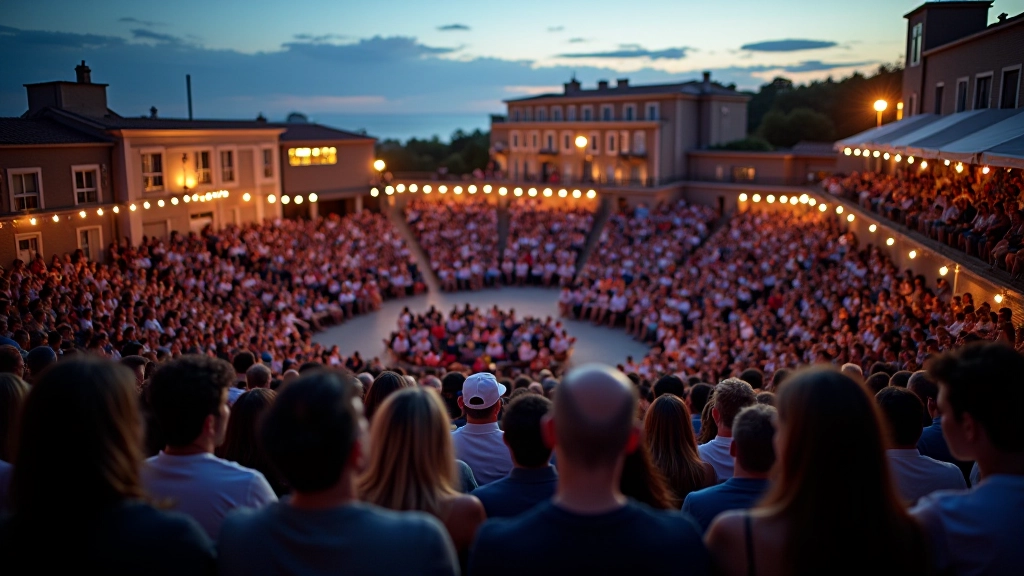
Covilhã Theatre Festival Opens with Sold-Out Shows
The annual summer theatre festival draws record crowds. Five weeks of classical and contemporary performances…
Read MoreContemporary dance takes center stage as seven countries showcase their brightest emerging talent. Evening performances happen throughout the city’s cultural district.
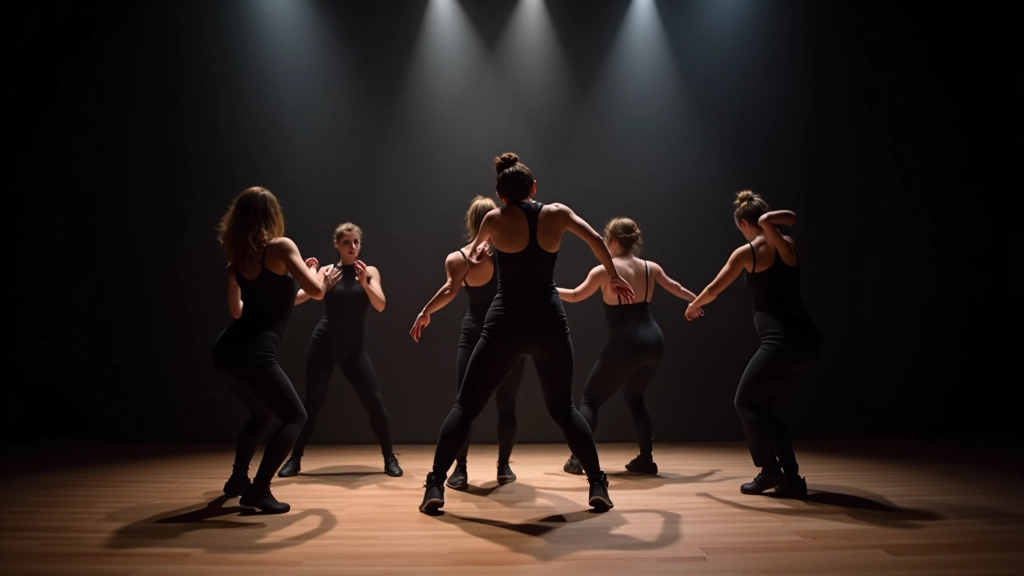
Lisbon Dance Week isn’t your typical festival. It’s a two-week celebration where emerging choreographers from Portugal, Spain, France, Belgium, Germany, Brazil, and South Korea bring their vision to life. The event runs through outdoor venues in Príncipe Real, Alcântara, and along the Tagus waterfront.
What makes this year different? The festival’s curators deliberately chose artists in their first five years of professional work. You’ll see raw talent, experimental movement, and choreography that challenges what you think dance should be. Most performances happen at 9 PM, letting the city lights create natural atmosphere without additional staging.
The lineup includes work from choreographers who’ve trained at major contemporary dance centers. Marina Cortés from Barcelona focuses on how bodies respond to electronic soundscapes. Her piece “Static” uses minimal movement with intense focus — dancers hold positions for extended periods, creating tension through stillness rather than motion.
Korean artist Jae Min Kim explores geometric patterns and architectural space. His ensemble work involves dancers creating human sculptures that shift and reconfigure. It’s meditative and precise. Then there’s São Paulo’s Lia Santos, whose style is visceral and grounded. She choreographs movement that feels almost sculptural, bodies in relationship to earth and gravity.
French choreographer Olivier Dufour presents “Fragments,” a solo piece about loss and reconstruction. German artist Hannah Weber created a group work for eight dancers exploring synchronized chaos — controlled improvisation that looks spontaneous but requires months of rehearsal. Each artist brings completely different aesthetic and philosophy to their craft.
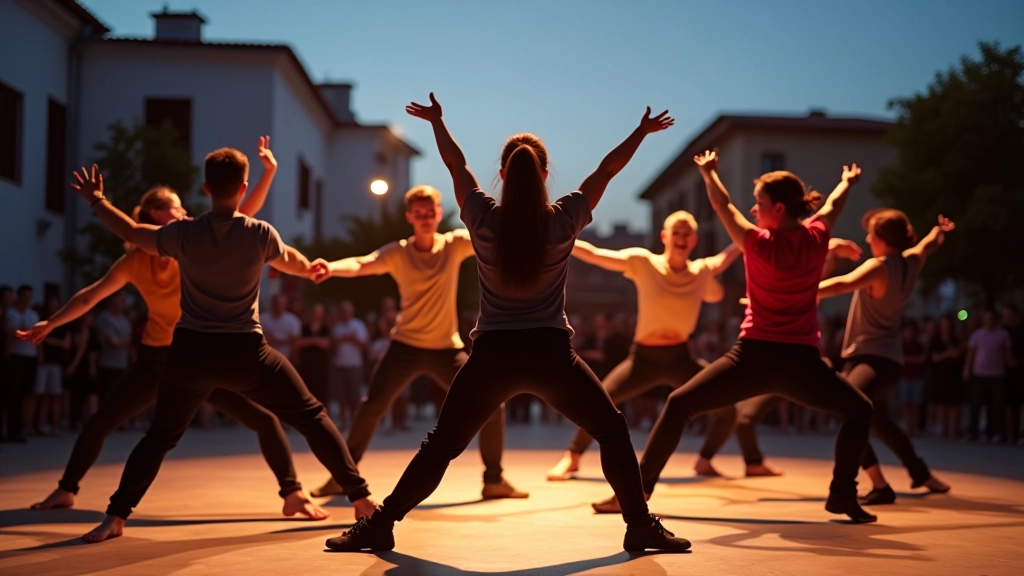
Príncipe Real’s garden plaza becomes an intimate 300-capacity venue. The space has history — it’s where locals gather, where tourists stumble upon street musicians, where the city feels alive. Dancing there creates dialogue between performer and place. Alcântara’s industrial waterfront space contrasts completely. Former warehouse district now buzzing with creative energy, it hosts larger works for 500+ people.
The Tagus waterfront performances are something special. You’re watching dance with the river as backdrop, city lights reflecting on water. There’s something about performing near water that changes the energy. Choreographers adjust their timing to account for air movement from the river, the way sound carries differently near water. These aren’t generic stages — they’re active participants in the performance.
Each venue requires different preparation from dancers. Running times on cobblestones demands different footwork than smooth wooden stages. Wind and temperature fluctuations affect how bodies move. Professional dancers who perform here develop acute awareness of their environment. They’re not just executing choreography — they’re responding to place.
Arriving early matters. Most performances start at 9 PM, but the atmosphere begins building around 8:15. Street vendors sell local wine and Portuguese pastries. Musicians set up in adjacent areas. There’s community forming before any dance happens.
Outdoor venues mean no fixed sightlines. Arrive 30 minutes early to position yourself. Different angles reveal different aspects of choreography. Standing closer shows detail and facial expression. Standing back reveals spatial patterns and group dynamics.
Some performances use live musicians. Others use recorded soundscapes. A few use silence as their primary material. The sound bounces differently off water and buildings than in traditional theaters. You’ll hear details you wouldn’t catch indoors.
March in Lisbon means mild evenings — typically 12-16C. Bring a light jacket. Wind near the river can shift quickly. Some performances continue in light rain. Bring an umbrella but stay flexible. Part of outdoor dance is accepting environmental variables.
Some pieces invite audience participation. Others maintain clear performer-spectator boundaries. Post-show conversations happen naturally. Artists often remain available after performances. It’s less formal than traditional theater — more like community gathering.
Contemporary choreography isn’t ballet. There’s no classical technique masking the person. You see vulnerability, effort, sometimes struggle. Dancers perform barefoot or in minimal footwear. You witness their actual strength, not just technique. Falls are possible — sometimes intentional, sometimes not. That’s part of the aesthetic.
Movement quality varies wildly. One piece might feature explosive energy — dancers moving at maximum speed with sudden stops. Another might be glacially slow, asking you to watch minute changes in weight distribution. Your job as an audience member is observing without judgment. What feels slow might reveal incredible control. What looks chaotic might be precisely structured.
These performances don’t always feel comfortable. That’s intentional. Artists challenge conventional beauty standards and movement possibilities. You might see bodies moving in ways that initially feel awkward or wrong. That discomfort often leads somewhere meaningful. Contemporary dance asks: what else is possible? How can we move beyond what we already know?
The festival runs for two weeks with multiple performances daily. You don’t need to plan ahead extensively — that’s part of outdoor festival charm. But knowing a few things helps.
Festival website posts daily schedules. Most performances run 30-45 minutes. Knowing start times lets you plan evening meals and transportation accordingly. Evening public transit is reliable — most venues connect via multiple tram and bus routes.
Each venue has character. Arriving 45 minutes early lets you soak in atmosphere, find good positioning, maybe grab food. Neighborhoods around venues have restaurants, cafés, and shops. Make an evening of it rather than just attending performance.
Don’t stick to one choreographer or style. Mix intimate solo pieces with large ensemble work. Watch experimental pieces alongside more narrative-driven work. This variety reveals how broad contemporary dance actually is. Each style teaches you something different about human movement.
After performances, dancers often stand nearby. They’re happy to discuss their work, their training, their creative process. These conversations deepen understanding. Ask questions. Share what you felt. That direct interaction is something you can’t get from traditional theater productions.
Contemporary dance represents something fundamental about being human — the desire to move, to express, to communicate beyond words. These seven choreographers are doing that work right now, in Lisbon’s streets and plazas, for audiences who show up and pay attention.
You don’t need special training to appreciate this work. You don’t need to understand modern dance theory or history. You just need to watch, to be present, to let yourself feel whatever emerges. That’s enough. That’s everything.
Check performance schedules, pick a venue, and arrive early. Bring comfortable shoes for standing and a jacket for evening air. Most importantly, bring openness. Contemporary dance rewards curiosity.
Explore More FestivalsThis article provides informational content about Lisbon Dance Week and contemporary dance. Information about venues, dates, and choreographers is accurate as of March 2026, but festival schedules and programming may change. Always verify current details on the official festival website before planning your attendance. Performance times, weather conditions, and venue logistics can vary. This content is educational and designed to help you understand and appreciate contemporary dance as an art form.